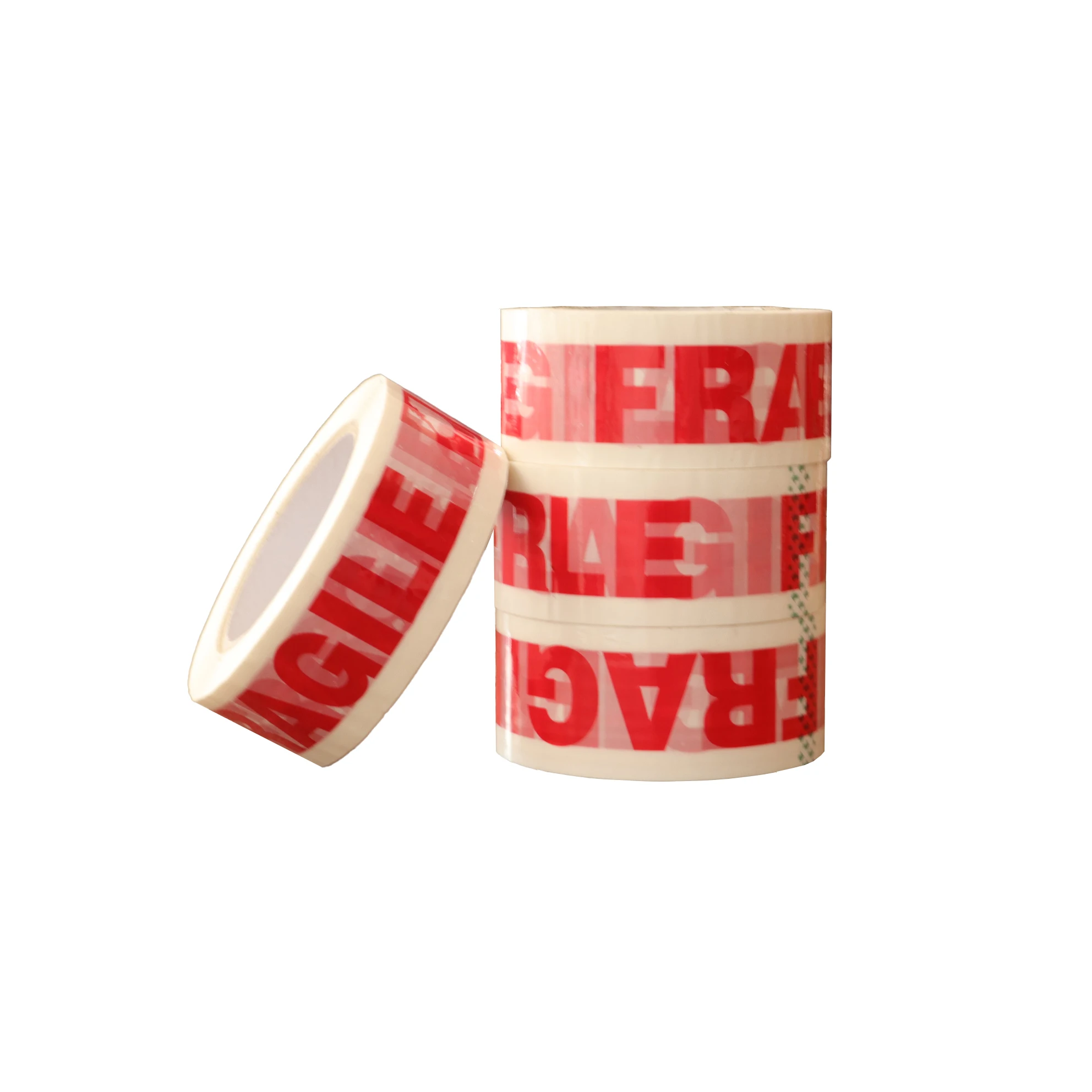
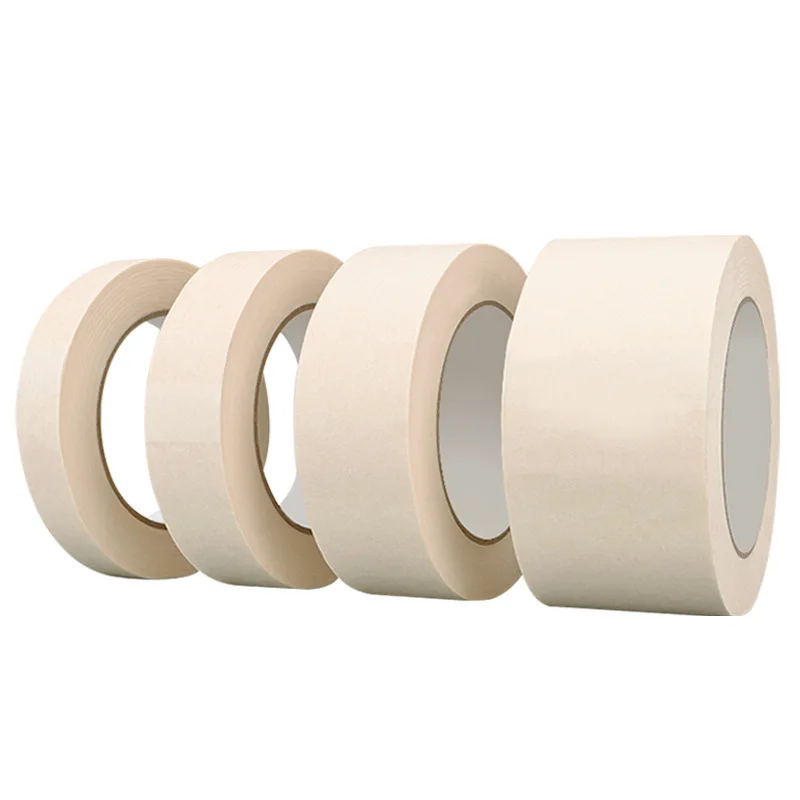
On a -35℃ winter night in Siberia, a batch of cartons sealed with ordinary tape split open during handling, spilling parts across the floor. Beside them, another batch sealed with specialized tape remained intact and was loaded smoothly onto a truck.
Extreme cold poses the ultimate challenge for industrial packaging. At temperatures below -30℃, ordinary BOPP tape becomes brittle like glass, losing all flexibility and adhesive strength. This leads to seal failure, label detachment, supply chain disruption, and cargo loss.
I. The Root Cause of Failure in Extreme Cold: Low-Temperature Brittleness
The core issues with ordinary tape in severe cold stem from material science limits:
Adhesive Hardening: The Glass Transition Temperature (Tg) of common pressure-sensitive adhesives typically ranges from -10℃ to -20℃. Below this threshold, the adhesive transitions from a flexible "rubbery state" to a brittle "glassy state," losing all tackiness.
Film Substrate Embrittlement: BOPP film itself becomes significantly less flexible at low temperatures, making it prone to cracking under bending or impact.
Stress Concentration: The differing contraction rates of the tape, carton, and contents in the cold generate immense internal stress, accelerating seal failure.
II. Solutions Engineered for Extreme Cold
To withstand -30℃ and below, specialized BOPP tape incorporates innovations across three dimensions:
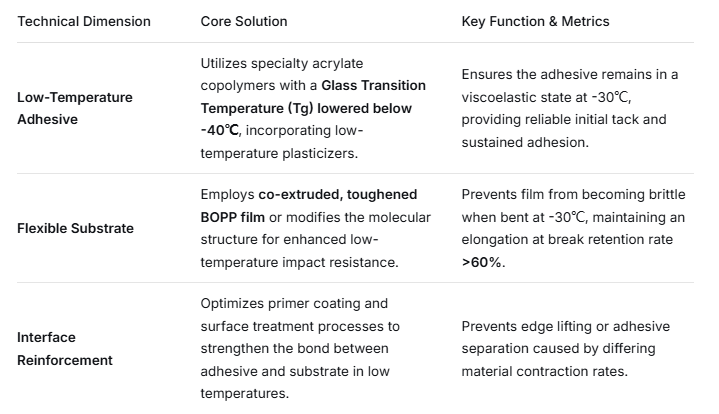
III. Performance Validation: Reliable Data at -30℃
Tests conducted in standard low-temperature labs and field locations like Yakutsk, Russia, confirm that the specialized tape's key performance far exceeds that of ordinary industrial tape:
1.Low-Temperature Peel Test (-30℃): The specialized tape's 180° peel strength retention on steel is >75%, whereas ordinary tape typically retains <15% or loses adhesion completely.2.Low-Temperature Hold Test (-30℃, 1kg load): The specialized tape shows displacement <1.0mm; ordinary tape fails instantly (immediate fall-off).
3.Cold Bend/Impact Test: The specialized tape can be bent 180° around a 5mm mandrel at -30℃ without cracking; ordinary tape typically fractures under the same conditions.
IV. Application Scenarios: Safeguarding Supply Chains in the Cold
1.Russian/Canadian Mining & Energy: Used for sealing equipment parts and oil samples stored outdoors, ensuring seals remain intact during winter transport in extreme cold.
2.Nordic Cold Chain Logistics: Maintains adhesion and prevents carton splitting during temperature transitions from cold storage (-25℃) to outdoor transport, securing the safety of food and pharmaceutical products.
3.Outdoor Equipment in Alpine Regions: Used for the factory packaging and labeling of products like snowmobiles and ski gear, ensuring labels and seals remain firmly attached in extreme low-temperature environments.
4.Polar Research & Construction Projects: The reliability of packaging for all supplies destined for polar or high-altitude cold regions is fundamental to project safety and cost, with specialized tape serving as a critical guarantee.
V. Market Outlook
With the development of Arctic shipping routes and increased economic activity in high-latitude regions, demand for industrial consumables resistant to extreme cold is growing. Future R&D will focus on smart temperature-sensing label tapes (indicating experienced low-temperature extremes) and more environmentally friendly low-temperature formulations.
At a freight station near the Arctic Circle, cartons sealed with specialized low-temperature tape are being loaded, ready to head into the -40℃ night. This is more than just a roll of tape; it is a promise of reliability—ensuring that no matter how harsh the climate, your goods arrive safely at their destination, securing every link in the supply chain.
 Hot News
2026-01-20
2026-01-19
2026-01-17
2025-04-10
2025-04-09

Black Spider Tape: High-performance tapes & films – BOPP, masking, cloth, foil, double-sided, polyimide, PVC/PE. Global, cost-effective.
Room 1818, NO. 198, Zhonghua North Ave, Shijiazhuang City, Hebei, China
Copyright © Shijiazhuang Black Spider Tape Co., Ltd. All Rights Reserved Privacy Policy Blog
 EN
EN